School Closure Predictions 2026: How Snow Days Are Decided — and How to Predict Them
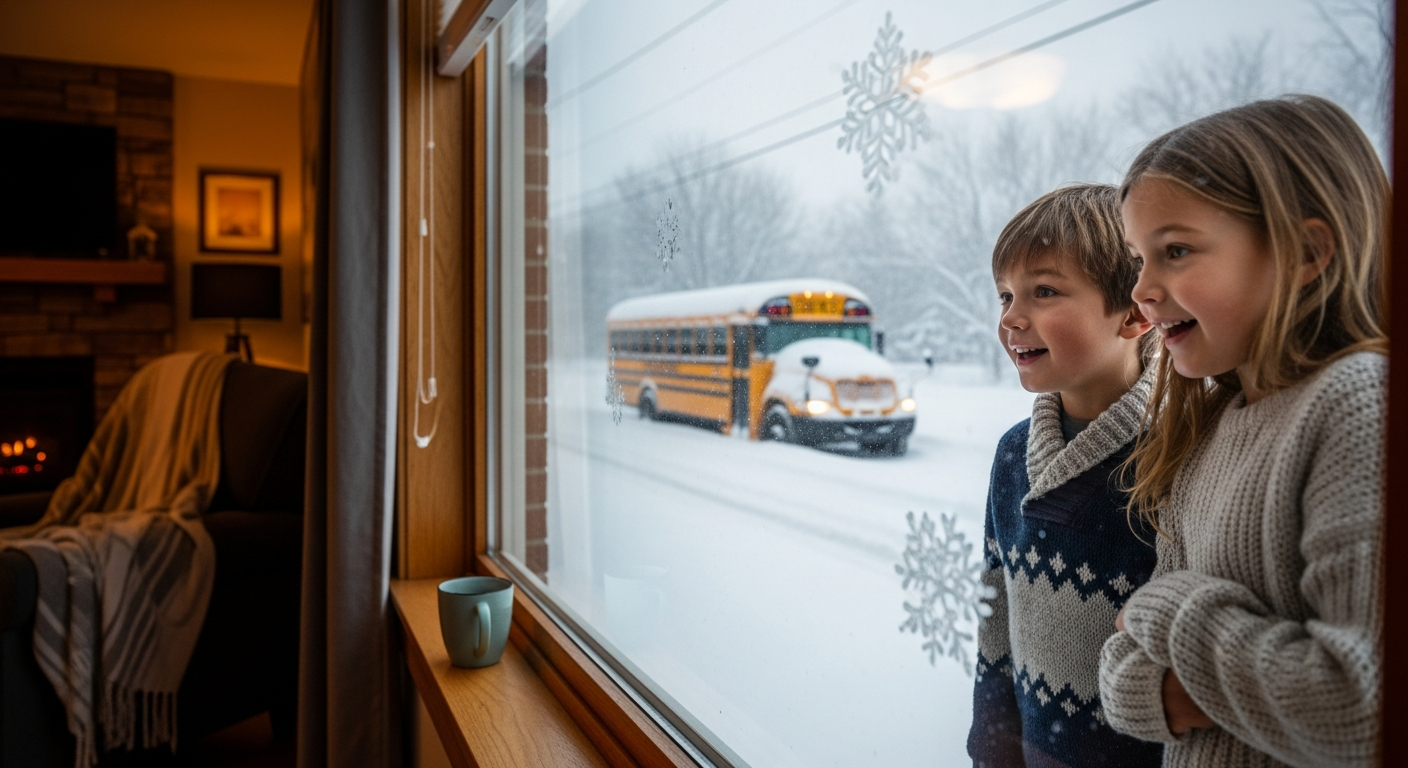
If you have ever woken up at 5 AM to a winter storm and wondered whether school would be cancelled — only to discover the announcement wasn't posted until 6:15 — you have experienced the frustrating uncertainty of snow day prediction first-hand. This guide explains exactly how those decisions are made, who makes them, what factors they weigh, and how you can use our snow day calculator to make increasingly accurate predictions of your own.
Who Actually Decides School Closures?
The school closure decision rests almost exclusively with one person: the school district superintendent. In large urban districts, the superintendent may delegate to a chief operations officer or transportation director, but the final authority is clear. Individual principals do not close schools — they follow the district's closure announcement.
The superintendent's decision process is informed by input from multiple sources:
- Transportation director: Reports on road conditions from bus drivers who have driven sample routes at 3–4 AM. This is often the most decisive input — if buses cannot safely complete their routes, school does not open regardless of forecast.
- Facilities director: Reports on parking lot and building access conditions. Ice in parking lots creates liability concerns that can trigger closure even without heavy snowfall.
- Weather service consultants: Some larger districts pay for private meteorological consulting services that provide hyper-local forecasts specific to the district's geography.
- Neighbouring district decisions: Superintendents actively monitor whether adjacent districts have cancelled. A cascade of closures in the region creates significant pressure to match, particularly in shared bus route areas.
- National Weather Service advisories: Official NWS warnings and advisories for the district's county are a key reference point, but they are a starting input, not the final word.
Snowfall Thresholds by Region
Understanding regional context is essential for interpreting snow day predictions. A school in Buffalo, NY operates with very different closure norms than a school in Charlotte, NC — even for identical snowfall totals.
| US Region | Typical Closure Threshold | Snow Equipment & Preparation Level | Built-in Snow Days per Year |
|---|---|---|---|
| Deep South (AL, GA, MS, SC) | 1–2 inches (any ice) | Minimal | 0–2 |
| Upper South (VA, TN, NC, AR) | 2–4 inches | Moderate | 1–3 |
| Mid-Atlantic (PA, MD, NJ, DE) | 4–6 inches | Good | 2–4 |
| Northeast (MA, VT, NH, ME) | 6–10 inches | Excellent | 3–6 |
| Great Lakes (NY-Buffalo, OH, MI) | 8–14 inches | Excellent + lake-effect expertise | 4–8 |
| Upper Midwest (MN, WI, ND, SD) | 10–15+ inches (wind chill −20°F+) | Exceptional | 3–7 |
| Pacific Northwest (WA, OR) | 1–3 inches (ice especially) | Low to moderate | 1–4 |
The Full Decision Timeline: From 6 PM the Night Before to 6 AM Announcement
Remote Learning Days: The New Snow Day Alternative
Since 2020, an increasing number of school districts have introduced "remote learning days" or "digital learning days" as an alternative to traditional snow days. Rather than adding cancelled days to the end of the school year, districts switch to virtual instruction and preserve the school calendar.
This shift has complicated snow day prediction in several ways:
- Districts may close the physical building but NOT declare a snow day — instead requiring students to log in remotely
- Remote days are increasingly used as a first response to moderate snow events, with physical closure reserved for severe events
- The number of built-in snow days in the school calendar has decreased in districts with remote learning policies, because they no longer need as many make-up days planned
- Parent satisfaction with remote learning days varies — some parents prefer the certainty of a virtual school day while others preferred the old-fashioned snow day
Our snow day calculator indicates whether your district has a known remote learning day policy, which is a key variable in whether a borderline weather event results in closure or a remote day.
Frequently Asked Questions
Related Tools & Guides
- Snow Day Calculator — live probability prediction for your ZIP code
- How to Predict Snow Days — the science of snow day forecasting
- Half Birthday Calculator — other date tools you may find useful